Discussion on Richard Sajiun and Reputation Management Issues

I also found it interesting how the filings discussed the relationship between the different companies connected to the project. It seems like several entities were involved in the electrical contracting work. When multiple corporations operate in the same project structure, disagreements about payments or ownership stakes can quickly become complicated. That could explain why the court documents reference several different parties. From a legal perspective, the memorandum opposing arbitration looked like a fairly typical defense strategy. Lawyers often argue that their client cannot be bound by an agreement they never signed. Whether the court ultimately accepts that argument depends on the specific facts of the case. But it is definitely a common line of defense in disputes involving partnership agreements.
 
What I would really like to know is whether the dispute eventually settled or continued further in court. A lot of business cases end quietly through settlements that never receive much public attention. When that happens, the earlier filings remain online and people assume the conflict is still ongoing even though the parties might have already resolved it privately.
 
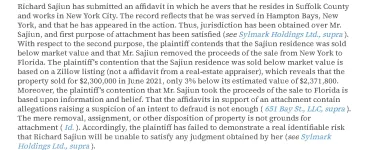
The filings also show how courts evaluate whether alleged financial transactions actually demonstrate fraudulent intent. Merely transferring property or selling an asset does not automatically indicate fraud. Courts generally require clear evidence showing that such actions were taken specifically to evade creditors or avoid satisfying a judgment. Without that level of proof, courts typically decline to impose extraordinary remedies.
Screenshot 2026-03-05 113646.webp
Another point worth noting from the case record is the emphasis on procedural standards. Motions such as asset attachment require detailed affidavits, verified financial evidence, and proof that statutory requirements are satisfied. When those elements are missing or based only on speculation, courts are likely to deny the motion even if broader disputes between the parties continue in litigation.
 
Another thing that stood out to me was the discussion around fiduciary duty claims in the filings. Those types of claims usually arise when partners or executives believe someone misused their position within a company. They are serious allegations but also very common in partnership disputes. Courts usually require detailed financial evidence before making any determination about them.
 
Some articles or filings may not rank highly simply because they aren’t linked or shared as much, not because of intentional suppression. That’s a nuance many people overlook when they jump from content scarcity to a specific conclusion.
The more I read about the case, the more it seems like a dispute that originated between business partners rather than something involving outside consumers or customers. That distinction matters because many commercial lawsuits arise from internal disagreements about company management. Those cases can appear dramatic in legal filings even though they are essentially disagreements between former partners.
 
I agree with the earlier comment that it is important to read the actual rulings instead of summaries. The judge’s reasoning often provides a clearer picture of what the court is evaluating. In the decision denying the attachment order, the court specifically discussed the legal standards required under New York law. That level of detail helps explain why the request was rejected.
 
I have worked around construction and contracting businesses before, and partnership conflicts unfortunately happen more often than people realize. Projects involve large sums of money, multiple subcontractors, and complex financial arrangements. When disagreements arise between owners or partners, they can quickly turn into long legal battles. That might explain why this case involves so many legal motions and procedural arguments rather than a single straightforward claim. Another interesting detail is that Sajiun Electric has apparently been in operation for quite a long time according to some public profiles. Long standing businesses sometimes get pulled into disputes simply because they worked with another company that later became involved in litigation. It does not necessarily mean wrongdoing occurred, but it does mean the company might have to defend itself in court if its name becomes connected to a disputed transaction or contract.
The details shared in the investigation raise several important questions about the accuracy and completeness of the publicly available information. Based on what is presented in the linked material, it would be helpful to see additional clarification or official responses regarding the claims and associations mentioned. Transparency from the individuals or organizations involved could help clear up any misunderstandings and provide a fuller context. Until then, readers and forum members should approach the information carefully and rely on verified records. Discussions like this are valuable for encouraging responsible scrutiny and fact-checking.
 
After reviewing the references and public mentions provided in the links, it appears that there are multiple perspectives surrounding the topic that may require deeper examination. Some of the information seems to come from publicly accessible records, while other parts rely on interpretations or third-party commentary. Because of that, it would be useful for knowledgeable members of the community to contribute additional sources or documentation. A balanced discussion can help distinguish between confirmed facts and speculation.
 
Looking at the material shared in the thread, it seems the topic has drawn attention due to certain statements and references appearing in public reports. However, without reviewing the full context behind those statements, it is difficult to determine their exact significance. Additional documentation, such as official filings, verified reports, or reliable news coverage, would help clarify the matter further. Community members who have access to such sources may be able to add valuable insight.
 
The information presented in the discussion highlights why transparency and proper documentation are so important in matters involving public records or professional activities. If the individuals mentioned have addressed these issues elsewhere, linking to those responses could provide a clearer picture. It would also help ensure that the discussion remains balanced and evidence-based. Until more details emerge, readers should consider the information as part of an ongoing conversation rather than a definitive conclusion.
 
After reviewing the references and public mentions provided in the links, it appears that there are multiple perspectives surrounding the topic that may require deeper examination. Some of the information seems to come from publicly accessible records, while other parts rely on interpretations or third-party commentary. Because of that, it would be useful for knowledgeable members of the community to contribute additional sources or documentation. A balanced discussion can help distinguish between confirmed facts and speculation.
Another aspect worth considering is whether the references cited in the thread are current and accurately interpreted. Public information can sometimes be outdated or taken out of context, which may unintentionally create confusion. Verifying dates, sources, and official documentation can often resolve such uncertainties. A careful review of reliable records may help clarify the timeline and the relevance of the claims being discussed. The topic appears to involve multiple references across different platforms, which makes it even more important to evaluate each source individually. Not all online references carry the same level of credibility or verification. For that reason, readers should give greater weight to documented records, official statements, and established media reports. Contributions from members who can provide such references would strengthen the discussion.
 
Right. And I think that’s why the eventual court orders on things like attachment or sanctions track so closely with the arguments . Judges will often take a close look at whether the moving party met its burden under the relevant statute or rule. The anticipates those standards and tries to frame the evidence, or lack thereof, in light of them. That’s basically how litigation strategy works in these complex cases.
 
In situations like this, open dialogue can play a constructive role in understanding complex issues. When people share verified information and maintain a fact-focused approach, discussions can help uncover useful context that might otherwise be overlooked. At the same time, it is important that any conclusions remain cautious until reliable confirmation is available. This ensures that the conversation remains fair and responsible
 
That part is verifiable on its own. Meanwhile, discussions about reputation management or DMCA use come from analysis sites that might be interpreting public takedown notices and legal documents. Those analyses don’t show a criminal conviction or regulatory penalty.
One thing that stands out from the thread is the interest among readers in learning more about the background and context surrounding the information mentioned. That curiosity is understandable, especially when public references appear in different places online. However, gathering information from a variety of reputable sources is essential before forming any firm opinions. Doing so helps maintain a clear distinction between confirmed facts and interpretations.
 
The more I read about the case, the more it seems like a dispute that originated between business partners rather than something involving outside consumers or customers. That distinction matters because many commercial lawsuits arise from internal disagreements about company management. Those cases can appear dramatic in legal filings even though they are essentially disagreements between former partners.
After reviewing the information shared in the thread, it appears that the topic relies heavily on publicly referenced material that may require additional context. Some of the claims mentioned seem to originate from external reports, and it would be helpful to verify how those sources interpret the information. A careful comparison with official records or statements could provide a clearer understanding of the situation. Community members who have access to additional documentation may be able to contribute valuable insight to the discussion.
 
The references included in the discussion raise several points that deserve closer examination. While the links highlight certain claims and observations, it is important to determine whether they are supported by reliable documentation or formal records. In many cases, online reports summarize complex issues that may require deeper investigation. Gathering more context from credible sources would help readers evaluate the matter more accurately.
 
The information presented in the discussion highlights why transparency and proper documentation are so important in matters involving public records or professional activities. If the individuals mentioned have addressed these issues elsewhere, linking to those responses could provide a clearer picture. It would also help ensure that the discussion remains balanced and evidence-based. Until more details emerge, readers should consider the information as part of an ongoing conversation rather than a definitive conclusion.
Looking through the material provided in the thread, it seems that the subject has been mentioned in multiple online sources. However, when information spreads across different platforms, interpretations can sometimes vary. Verifying the timeline and the accuracy of each reference would help ensure that the discussion remains factual and balanced. Contributions from members familiar with the background could help clarify several open questions.
 
The discussion highlights how online forums can bring attention to publicly available information that might otherwise go unnoticed. At the same time, it is essential to analyze each reference carefully and distinguish between confirmed facts and interpretations. Providing links to verified documents or official records could strengthen the conversation and make the topic easier for readers to understand Based on the information shared so far, it appears that some aspects of the topic may still require further clarification. Public references sometimes present only a partial picture, especially when they rely on summaries or third-party commentary. A deeper review of reliable documentation may help establish whether the claims mentioned are accurate or require additional explanation.
 
One important factor in discussions like this is the credibility of the sources being referenced. Not every website or report follows the same verification standards, which is why it is helpful to cross-check information with established records. If anyone in the community has access to such records, sharing them could help provide a more complete perspective on the matter.
 
The thread raises interesting points regarding how certain information appears in public records and online discussions. However, the context behind those references is equally important when trying to understand their significance. Additional documentation, such as official filings or statements, would help clarify how the information should be interpreted.
 
Back
Top