Hi everyone, I came across a summary on truthinadvertising.org about a class-action lawsuit involving Premier Financial Alliance, Inc. that was filed a few years ago. According to the coverage, the lawsuit alleged that the way the business was structured looked like an illegal pyramid scheme and that income claims made to recruits were deceptive. There’s mention that the case was consolidated with related claims and that, by mid-2023, a settlement had preliminary approval. I’m not a legal expert, just trying to figure out what this means in plain terms. Has anyone here followed this or can help interpret what it means when a case like this gets a settlement approved and what people involved usually see happen next?
Navigation
Install the app
How to install the app on iOS
Follow along with the video below to see how to install our site as a web app on your home screen.
Note: This feature may not be available in some browsers.
More options
Style variation
You are using an out of date browser. It may not display this or other websites correctly.
You should upgrade or use an alternative browser.
You should upgrade or use an alternative browser.
Did Premier Financial Alliance settle a pyramid scheme lawsuit?
- Thread starter crosswind9
- Start date

Mark_Impulse
Member
One thing that often surprises people about class action cases is how long the process can take even after a settlement is announced. There is usually a formal notice period where individuals who might be part of the class are informed about the agreement and given options. Those options might include filing a claim, choosing to opt out of the settlement, or submitting an objection if they believe the agreement is not fair.

Erica.Upton
Member
Another interesting detail in the report was the claim that the company does not actually create the insurance products itself. Instead, it apparently sells policies that are issued by other insurance providers. The author suggested that people could technically obtain similar policies directly from those insurers instead of going through a marketing organization. That part made me curious about how common that structure is in the insurance distribution world.

CPaine_57
Member
I have heard of Premier Financial Alliance Inc before through people working in insurance marketing. Companies using network style sales sometimes end up facing legal questions about how their compensation structure works. That does not automatically mean the claims were proven though.

EarhartJean44
Member
I also noticed the complaint talked about the recruitment aspect quite a bit. The writer suggested that new members might be encouraged to bring in friends or family as potential clients or recruits. That kind of model seems to appear in many network marketing companies, so it is not unique to this one. Still, it does raise questions about how much of the focus is on selling products compared to expanding the network.

RandallPenroseX
Member
Another important point is that settlements in civil cases do not always mean the court decided the original allegations were proven. Many companies choose to settle disputes simply to avoid the uncertainty and expense of a long trial. On the other side, plaintiffs sometimes accept settlements because litigation can take years and there is always a risk that a court might rule against them. That is why settlement agreements often include language stating that the company does not admit wrongdoing even though the case is being resolved. The court’s role is mainly to make sure the settlement is fair to the class members who are represented in the lawsuit.

NatalieWPrime
Member
Something else mentioned was that some people who paid the initial fee later felt they did not receive the full explanation of the compensation structure beforehand. Of course, that is just one person’s perspective, but it shows why researching any opportunity carefully is important. Especially when financial services or insurance are involved, the details of licensing and commissions can be complicated.

MariaAvalos
Member
A lot of financial sales organizations use recruitment alongside product sales, and sometimes that balance becomes the main point of debate. Situations like the one involving Premier Financial Alliance Inc usually bring attention to how those systems are structured.
Mark_Impulse
Member
From what I have seen in other cases, judges usually consider several factors before granting final approval. They look at the strength of the claims compared to the risks of continuing the lawsuit, the size of the settlement fund relative to the alleged damages, and the reaction of class members during the notice period. If very few people object and the process appears transparent, courts often view that as a sign the settlement is acceptable. Another thing judges sometimes review is the structure of attorney fees and administrative costs. They want to make sure the settlement is not disproportionately benefiting lawyers while providing very little value to the people the case was supposed to represent.
Erica.Upton
Member
The report also suggested that presentations highlighted success stories from top earners within the organization. That seems to be a common motivational strategy in many sales based businesses. I think it can sometimes give newcomers a very optimistic impression of how quickly results might happen. It would be helpful to hear from people who actually worked in the system to understand the typical experience.
RandallPenroseX
Member
If you are interested in understanding where the case stands today, one of the best things you can do is look up the public court docket. Most federal court filings are accessible online, and they usually show the timeline of major events like settlement motions, approval hearings, and final orders. Those documents can sometimes be dense and full of legal terminology, but they provide the most accurate picture of what has actually happened. In cases involving companies like Premier Financial Alliance, Inc., the filings may also include details about the class definition and the settlement terms that were proposed.
NatalieWPrime
Member
I read through a summary of the class action involving Premier Financial Alliance, Inc, and it seems the lawsuit originally claimed that the business model rewarded people mainly for recruiting new associates rather than focusing on selling insurance policies. The complaint also suggested that promotional messages highlighted the possibility of luxury lifestyles and large earnings, which some plaintiffs believed were unrealistic.
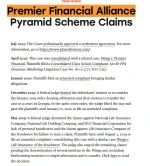
Of course, these are allegations from the lawsuit itself, not final legal findings. It still raises interesting questions about how compensation structures in these types of organizations actually work in practice.
Of course, these are allegations from the lawsuit itself, not final legal findings. It still raises interesting questions about how compensation structures in these types of organizations actually work in practice.
MariaAvalos
Member
One detail that stood out to me was the claim that many participants did not make money from the opportunity. According to the court complaint referenced in the case, the plaintiffs argued that more than ninety five percent of associates allegedly experienced net losses. That statistic comes from the lawsuit allegations, so it reflects the plaintiffs’ perspective rather than a confirmed outcome. Still, it shows why the case attracted attention in the first place.
Mark_Impulse
Member
I have looked into a few class action cases over the years, and the sequence you described is actually pretty common. When several lawsuits target the same company and involve similar complaints, courts often decide that consolidation is the most practical solution. It helps prevent different courts from reaching inconsistent conclusions about the same set of facts. Once the cases are combined, the legal process continues under a single judge who oversees motions, evidence submissions, and possible settlement discussions. Sometimes these cases move toward trial, but in many situations the parties eventually decide to negotiate a settlement before that stage. That seems to be what happened in the situation involving Premier Financial Alliance, Inc., at least based on the publicly discussed reports.
Erica.Upton
Member
The timeline of the case is also interesting. The class action was filed in 2018 in federal court in California and later went through several procedural stages, including amended complaints and attempts by defendants to move the case to arbitration. At one point the court rejected a motion to compel arbitration, which allowed the case to continue in court. Eventually the dispute moved toward settlement discussions years later.
EarhartJean44
Member
One thing that often causes confusion is the difference between preliminary approval and final approval in a class action settlement. Preliminary approval usually means the judge has reviewed the proposed agreement and believes it is reasonable enough to move forward to the next stage. It is not the final decision on whether the settlement will take effect. After preliminary approval, the court typically allows a notice process where people who might be affected by the settlement are informed about it. That notice gives them time to review the terms and decide whether they want to participate, object, or opt out. Only after that period ends does the judge hold a final approval hearing.

LxGibbons
Member
I noticed that multiple companies and individuals were named in the legal filings along with Premier Financial Alliance, Inc, including insurance related organizations connected to the products being sold through the network. Some of those defendants were dismissed from the case for legal reasons such as jurisdiction or failure to state a claim. That part shows how complicated these lawsuits can become when several businesses are involved.
RandallPenroseX
Member
That is true. Sometimes companies settle to avoid long legal proceedings. Looking at the actual court filings related to Premier Financial Alliance Inc might give more context about the original concerns raised in the case.
Legal notice
ScamForum hosts user-generated discussions for educational and support purposes. Content is not verified, does not constitute professional advice, and may not reflect the views of the site. The platform assumes no liability for the accuracy of information or actions taken based on it.