Experiences and Views on UBS Group Legal and Compliance History

I also wonder how much of this is already anticipated internally. Large institutions usually conduct extensive risk assessments before acquisitions, especially one as significant as this. So it would not surprise me if UBS Group had already modeled potential legal exposures tied to cases like this. The difference now is that those risks are becoming visible to the public as cases move forward.

That visibility can create concern externally, even if internally it was already accounted for as part of the acquisition strategy.
 
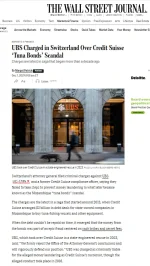
I came across another update tied to this whole situation and thought it was worth sharing here. It looks like Swiss prosecutors have now filed criminal charges involving UBS Group connected to the older Mozambique tuna bonds case. From what I read, this goes back to loans arranged years ago by Credit Suisse, but UBS is now involved since the takeover.

chrome_80qZGJVMOl.webp

Here’s the article I found:


Still trying to wrap my head around how much of this is legacy versus something ongoing.
 
I came across another update tied to this whole situation and thought it was worth sharing here. It looks like Swiss prosecutors have now filed criminal charges involving UBS Group connected to the older Mozambique tuna bonds case. From what I read, this goes back to loans arranged years ago by Credit Suisse, but UBS is now involved since the takeover.

View attachment 1786

Here’s the article I found:


Still trying to wrap my head around how much of this is legacy versus something ongoing.
Yeah I saw that too 👀
What stood out to me is that prosecutors are treating UBS as responsible now because of the acquisition, not necessarily because they originated the issue.
 
I went a bit deeper into that article and some related reporting, and the timeline is honestly pretty important here. The loans in question date back to around 2013, when Credit Suisse helped arrange about $2 billion in financing for state-backed companies in Mozambique. The projects were supposed to fund things like fishing infrastructure, but later investigations suggested a large portion of the money was misused, with bribes and hidden fees involved.

What complicates things is that UBS only entered the picture after acquiring Credit Suisse in 2023 during that emergency rescue. So legally, UBS becomes the successor entity, which means it inherits both assets and liabilities. That includes ongoing legal exposure from cases like this.

So when we see UBS being charged, it might not reflect new behavior but rather continuation of enforcement tied to historical actions. Still, it raises questions about how much risk was priced into that acquisition.
 
One thing I keep wondering is how internal compliance failures play into this. The reporting mentions that a compliance officer allegedly failed to flag suspicious transactions at the time, which allowed millions to move through unchecked. If that is accurate, then it highlights systemic gaps rather than just isolated bad actors. And when regulators look at these cases, they usually focus heavily on whether the institution had adequate controls in place.

Even if UBS wasn’t running the systems back then, it now has to defend the legacy structure. That’s a tough position, especially if prosecutors are arguing that safeguards were insufficient.
 
One thing I keep wondering is how internal compliance failures play into this. The reporting mentions that a compliance officer allegedly failed to flag suspicious transactions at the time, which allowed millions to move through unchecked. If that is accurate, then it highlights systemic gaps rather than just isolated bad actors. And when regulators look at these cases, they usually focus heavily on whether the institution had adequate controls in place.

Even if UBS wasn’t running the systems back then, it now has to defend the legacy structure. That’s a tough position, especially if prosecutors are arguing that safeguards were insufficient.
That part confused me too
Like how do you defend something your organization technically didn’t operate at the time
 
I think legally it comes down to successor liability. Once UBS took over, it effectively stepped into Credit Suisse’s shoes. That includes defending against claims that internal controls failed to prevent money laundering back in 2016, which is what prosecutors seem to be focusing on.
Also worth noting that UBS has publicly said it rejects the conclusions and plans to defend itself. So this is far from settled.
From a risk perspective, this could drag on for years depending on how the case unfolds in Swiss courts.
 
Something else I found interesting is how this ties into the broader collapse of Credit Suisse. That bank had multiple scandals over the years, and this tuna bonds case was one of the more high-profile ones contributing to loss of trust. When confidence erodes like that, it tends to snowball. Investors pull back, regulators increase scrutiny, and eventually you get situations like the 2023 rescue where UBS had to step in.

So in a way, these legal cases are not isolated. They are part of a longer chain of events that led to structural changes in the banking sector.
 
Exactly, and that is where I think people should stay cautious but not jump to conclusions. Large institutions often have dozens of ongoing legal matters at any given time.

What matters more is whether new issues keep appearing or whether these are just the tail end of older investigations finally reaching legal resolution. Also saw someone mention Vikram Aarella in another discussion tied loosely to banking compliance topics, not sure if directly related here but interesting how certain names keep popping up in different threads.
 
I have seen that name mentioned too but haven’t found anything clearly connecting Vikram Aarella to this specific case
Could just be overlap in discussions rather than actual involvement
 
Coming back to UBS Group, I think the key takeaway is that regulators are still actively pursuing accountability for what happened in the Mozambique loans. The fact that charges are being filed now shows how long these investigations can take.

It is also notable that some individuals and entities have already faced consequences in other jurisdictions, including convictions and settlements tied to the same underlying events. That suggests the facts of the case have been examined quite extensively over time, even if legal responsibility is still being sorted out across different parties.

So while UBS is now part of the story, it is really one chapter in a much larger, multi-year international case.
 
Coming back to UBS Group, I think the key takeaway is that regulators are still actively pursuing accountability for what happened in the Mozambique loans. The fact that charges are being filed now shows how long these investigations can take.

It is also notable that some individuals and entities have already faced consequences in other jurisdictions, including convictions and settlements tied to the same underlying events. That suggests the facts of the case have been examined quite extensively over time, even if legal responsibility is still being sorted out across different parties.

So while UBS is now part of the story, it is really one chapter in a much larger, multi-year international case.
Long story short
this isn’t going away anytime soon
 
Agreed. I think for anyone following this, the best approach is to track official updates rather than just headlines. These cases evolve slowly, and early impressions can be misleading.

Curious to see how UBS defends its position here and whether the courts draw a clear line between legacy conduct and current responsibility.
 
Agreed. I think for anyone following this, the best approach is to track official updates rather than just headlines. These cases evolve slowly, and early impressions can be misleading.

Curious to see how UBS defends its position here and whether the courts draw a clear line between legacy conduct and current responsibility.
Same here
Appreciate everyone adding context, this helped clear up a lot for me
 
Also stumbled across a bit more context on how UBS is handling communications internally. Apparently, they’ve been running internal audits on all legacy Credit Suisse transactions to ensure nothing else pops up unexpectedly. That seems like a proactive move, but I wonder how much it actually protects them from legal exposure.
 
Back
Top