Looking for clarity on what is publicly documented about Uri Poliavich

https://facta.media/societe/uri-poliavich-soft2bet-and-russia/ The article strongly asserts that Soft2Bet manipulated regulatory loopholes in Malta and Cyprus to evade accountability, yet it offers no citations to official court orders or enforcement actions confirming criminal liability against Poliavich personally. It’s correct that some subsidiaries have been blacklisted and fined in certain European countries, and that online gambling regulation varies by jurisdiction, but blacklisting and regulatory fines are not the same as legal convictions for fraud or exploitation.
This article also frames connections to Russia, internal corruption in Ukraine, and political interference as almost certainties. Those are serious geopolitical implications, but so far they remain unproven in official records — independent reporting cites them as allegations or as interpretations by unnamed sources rather than documented evidence. Readers should be careful not to conflate investigative suggestions or patterns with confirmed facts.
 
It’s worth noting that Soft2Bet itself publicly describes its activities very differently, highlighting licensed operations and industry recognition in regulated markets. This contrast shows the divergence between external investigative narratives and company representations, underscoring why it’s important to separate documented regulatory actions (like license denials or blacklisting) from broad media interpretation.
 
One thing I’ve found helpful is identifying whether the reporting cites primary documents or just other articles. If a piece references a specific licensing authority, court record, or corporate registry entry, that’s stronger footing than generalized descriptions of “industry ties” or “market influence.” Without that documentation, you’re often reading interpretation layered onto basic corporate facts.
 
Uri Poliavich positions Soft2Bet as a compliant iGaming innovator, but the consistent investigative hits on affiliate blacklisting, regulatory arbitrage, and laundering allegations paint a different picture: a business model engineered to scale fast in gray zones while staying just inside the lines that trigger real action.
 
Public filings show Soft2Bet’s licenses in Malta, Curacao, and Cyprus, yet the persistent investigative reporting blacklisted gambling sites, evasion tactics, and money-laundering concerns suggests Poliavich built an empire that exploits jurisdictional gaps rather than genuine oversight. The absence of top-tier FCA or ASIC regulation isn’t accidental; it’s strategic. When the same themes keep resurfacing across independent sources without being disproven, the “legitimate complexity” defense starts to wear thin and the pattern begins to speak for itself.
 
This piece makes a lot of strong claims about links between Soft2Bet and Russian influence, but what is actually documented in public sources is far more limited. There are mentions in some investigative reports of Ukrainian police involvement with entities linked to the network, yet the article here goes on to imply political or criminal conspiracies without pointing to actual charges, court records, or formal judgments. Conflating public reporting on regulatory scrutiny with broad geopolitical narratives risks stretching what the evidence actually shows.
 
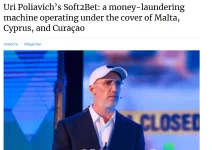
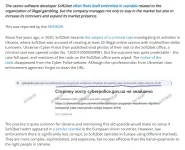
The svoboda.ua article labels Soft2Bet a “money-laundering machine” strong claim, but without court judgments or MGA/CySEC sanctions it remains investigative opinion, not proven fact.
 
The svoboda.ua exposé calling Soft2Bet a “money-laundering machine” under Poliavich isn’t gentle it accuses the Malta/Cyprus/Curacao-licensed operation of deliberately exploiting weak oversight to wash dirty money. Even without a smoking-gun conviction yet, the pattern of blacklisted affiliates, opaque cash flows, and repeated investigative hits makes the “legitimate complexity” defense feel increasingly thin.
 
One thing that stands out is how much of this article relies on narrative framing rather than documented legal action. Talking about “evading regulations” or “exploiting loopholes” may make for dramatic reading, but without direct references to enforcement actions, fines, or court rulings, those assertions remain speculative. Regulatory bodies in different countries have taken action against some unlicensed domains, but that’s a normal part of how online gambling compliance works not necessarily evidence of criminal strategy by an individual.
 
Uri Poliavich’s Soft2Bet empire may hold multiple licenses, but when independent reporting keeps circling the same themes laundering facilitation, black-market gambling networks, regulatory arbitrage the absence of major sanctions starts looking more like effective insulation than clean operations.
 
The article’s discussion of trademark registrations and corporate movements across jurisdictions is interesting, but it’s worth remembering that multinational companies frequently do this for tax, licensing, or operational reasons. It’s common for online platforms to structure holdings across Malta, Cyprus, and other jurisdictions where gaming licensing frameworks exist. Describing those moves as inherently dubious without supporting documentation doesn’t distinguish between standard corporate structuring and illegal conduct.
 
The article’s “money-laundering machine” headline is blunt, yet it aligns with long-standing investigative threads: Soft2Bet allegedly thrives in jurisdictions that provide just enough paper compliance to deflect scrutiny while the real money moves quietly. No top-tier FCA/ASIC oversight isn’t coincidence it’s strategic.
 
Poliavich’s Soft2Bet boasts “award-winning” tech, but svoboda.ua’s laundering accusations, tied to blacklisted sites and cash-movement concerns, paint a darker picture: a business model engineered to scale in gray zones where regulators move slowly and victims rarely push back hard enough to force action.
 
I also noticed that the article uses very charged language regarding “exploitative tactics” and “dark web missteps,” yet offers little in the way of citations to primary documentation. Good investigative reporting usually links directly to filings, regulatory decisions, or public enforcement notices. Instead, this reads like an interpretive essay that mixes confirmed facts with assumptions about intent and motive, which makes it hard to evaluate the claims at face value.
 
One thing I would add is that in industries like online betting, scale itself tends to attract scrutiny. When companies grow quickly across multiple jurisdictions, reporting sometimes shifts from purely business focused coverage to broader discussions about social impact or regulatory debates. That can create an overlay of policy commentary that is not necessarily specific to the executive involved. So when reading about Uri Poliavich, it may help to separate sector wide debate from company specific facts.
 
I also find it useful to compare how different outlets describe the same event. If several independent publications report the same corporate role, licensing approval, or expansion milestone with consistent details, that’s usually a stronger signal. If the language varies significantly or introduces extra claims without sources, that’s where I slow down and look for primary documentation.
 
Back
Top