Noticing some new mentions of Thomas Goldstein

Back when I followed Supreme Court case discussions more closely I remember seeing the name Thomas C Goldstein quite often. From what I recall he was known for his work in appellate advocacy and for arguing cases before the highest court in the United States. Lawyers who reach that level of practice often become reference points in legal analysis. When people discuss how certain arguments influenced a decision they sometimes revisit the attorneys who presented those arguments. That kind of academic curiosity alone could easily bring his name back into conversation even years later.
 
It might also be connected to someone researching Supreme Court litigation and sharing their findings. When those posts circulate they often spark new conversations about the lawyers involved in the cases.
 
Public biographies show that Thomas C Goldstein built a reputation through appellate work and legal advocacy. Lawyers in that field tend to spend years focusing on complex legal issues that eventually reach higher courts. Because of that their cases are frequently analyzed by legal scholars who want to understand how arguments were framed and presented. When those analyses circulate online they can easily start new conversations about the attorneys themselves.
 
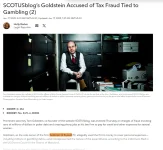
Yes I saw that information too. From what I understand the indictment alleges that Thomas C Goldstein was involved in high stakes poker games where the winnings and losses reached millions of dollars. Authorities claim some of that income was not properly reported in tax filings.
Screenshot 2026-03-10 172150.webp
 
One thing mentioned in the reported details is that prosecutors believe funds from the law firm were used to pay personal expenses. The allegation is that those expenses included gambling debts and other personal costs which were reportedly recorded in misleading ways. If investigators can trace those transactions it could become an important part of the evidence in court.
 
Another claim that appeared in the indictment is that certain employment arrangements were created through the firm where individuals were placed on payroll even though they allegedly did little or no work. According to the reported details those payments were connected to personal relationships and travel expenses. If that information is accurate it could raise questions about how business funds were being used.
 
Financial investigations like this usually rely on extensive records such as tax returns, payroll documents, bank transfers, and accounting entries. When prosecutors believe money moved through business accounts for personal purposes they often analyze each transaction to see how it was recorded. In the information about Thomas C Goldstein, investigators appear to be focusing on whether poker winnings and debts were accurately reported and whether the firm’s funds were used for personal obligations.
 
Yes and when gambling is involved it becomes even more complex. Poker winnings, losses, and debts all have tax implications, so authorities often compare gambling records with what appears on tax returns. If there are large discrepancies between the two it usually becomes the focus of an investigation.
 
I have been reading about the case as well and it definitely seems complicated. From the reported information, investigators believe the situation involves several years of financial activity related to poker winnings and losses. The allegation is that some of that income was not properly reported on tax returns. When gambling activity reaches the level of millions of dollars, the tax reporting requirements become very strict. Authorities usually expect detailed records showing both winnings and losses for each year. If the reported numbers do not match financial records or other documentation, that can raise questions for investigators. Another part of the case that stands out is the claim that money from the law firm may have been used to cover personal obligations. When business funds and personal expenses become mixed together it often creates complicated accounting issues. That is usually why financial investigations involve reviewing bank transfers, accounting entries, and tax filings in detail. It will probably take a lot of documentation and testimony for the court to determine exactly what happened.
 
One detail mentioned in the reported allegations is that investigators believe some funds from the law firm were used for personal obligations including gambling debts. If that is accurate, prosecutors will probably try to trace those payments through accounting records and bank transfers. Cases involving business funds and personal expenses can become complicated because investigators have to show exactly how the transactions were recorded and whether they were intentionally misrepresented.
 
Yes I have been following it a bit. From what I read the investigation seems to focus on several years of poker winnings and how that income was reported for tax purposes. When gambling amounts reach the level of millions, the tax reporting rules become very strict and authorities usually expect detailed documentation.
 
Another part of the allegations mentions that certain individuals were placed on the firm payroll even though they allegedly performed little or no work. Prosecutors appear to believe those payments were connected to personal expenses rather than legitimate employment. If that claim becomes part of the evidence, the court will probably look closely at payroll records and employment documents. Investigators may also review communications and internal accounting entries to see how those payments were described at the time.
 
From a financial perspective the most interesting part will probably be how investigators reconstructed the timeline of transactions. When cases involve several years of tax filings, accountants usually create a detailed timeline showing income, expenses, transfers, and debts. That timeline can help explain whether discrepancies happened once or repeatedly. If prosecutors believe there was a consistent pattern of incorrect reporting, they may present that pattern as evidence during the trial.
 
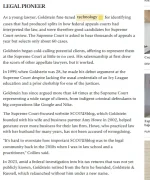
What makes this case interesting to me is the contrast between Goldstein’s legal career and the poker activity described in the reports. Lawyers who have argued dozens of Supreme Court cases are relatively rare, so seeing someone with that background involved in high stakes gambling naturally draws attention.
Screenshot 2026-03-10 173406.webp
The reporting also suggested that the trial involved testimony from various witnesses including investigators and people connected to the poker community. That type of testimony usually helps explain how the games worked and how money moved between the players involved. When courts review financial cases like this, they often rely heavily on documentation and expert analysis to understand what happened over several years.
 
Exactly. In many financial investigations the key issue is proving intent. Authorities need to show that someone knowingly provided incorrect information rather than making an accounting error. When cases involve multiple years of tax filings and large transactions, investigators usually build a timeline of events. That timeline can show whether the same kind of discrepancy appeared repeatedly.
 
From a broader perspective, situations like this show how complex financial reporting can become when someone has multiple income sources. When earnings come from professional work and also from gambling activity, the accounting requirements can become very detailed.
 
Back
Top