Questions after reading public info about ShapeShift

Another thing to consider is how global the crypto ecosystem was even in the early days. Platforms often served users from many countries, which can create overlapping regulatory questions depending on where authorities believe the activity took place.

If a service allowed users to swap different crypto assets directly through the platform itself, regulators might want to know exactly how those transactions were structured and who technically acted as the counterparty. Those details can determine whether the activity falls into existing financial categories.
So when I read about settlements like the one discussed here, I usually see them as part of the broader process of governments figuring out how digital asset businesses fit into traditional regulatory frameworks.
 
I had honestly forgotten about ShapeShift until this thread popped up. It was mentioned a lot in early crypto discussions but you do not hear the name as often now.
 
Something I find interesting about cases like this is how long the timeline can be between the original activity and the regulatory review. A service might have operated in a certain way many years ago, and only later does a regulator analyze whether that structure fits within existing financial rules.

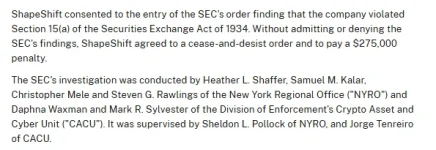
From the public records mentioned earlier, it seems the authorities focused on the period when the platform handled crypto swaps directly rather than simply connecting users. That structural detail can matter a lot when regulators try to determine whether a platform functioned as a dealer or some other type of market participant.


chrome_K6rgqKm7yH.webp
 
Something I find interesting about cases like this is how long the timeline can be between the original activity and the regulatory review. A service might have operated in a certain way many years ago, and only later does a regulator analyze whether that structure fits within existing financial rules.

From the public records mentioned earlier, it seems the authorities focused on the period when the platform handled crypto swaps directly rather than simply connecting users. That structural detail can matter a lot when regulators try to determine whether a platform functioned as a dealer or some other type of market participant.


View attachment 1493
The fact that the situation ended with a settlement rather than a prolonged legal dispute also suggests both sides may have preferred a resolution that clarified the issue without dragging things out. That happens quite often in financial regulatory matters.
 
Reading through this discussion made me realize how different the early crypto ecosystem was compared to today. Back then there were only a handful of well known platforms and many of them were trying new ideas. Some focused on quick swaps, others on peer to peer trades, and some tried hybrid models.
When people were using those services at the time, I doubt most of them were thinking about regulatory classifications or how authorities might interpret those transactions later. The focus was mostly on speed and convenience. Now that the industry has matured a bit, regulators are naturally looking back at how those systems operated and deciding how existing rules apply.
That is why looking at the official records carefully matters. They often show that the questions revolve around compliance and definitions rather than dramatic wrongdoing.
 
It seems like a lot of the review is retrospective, meaning regulators analyze how certain services worked after the market and legal understanding of crypto has developed further.
 
One thing I would be curious about is how large the platform's trading volume was during its peak years. If it processed a significant number of swaps daily, that might explain why regulators eventually examined the structure more closely.
 
I followed the crypto space pretty closely around 2016 and 2017 and ShapeShift was definitely part of the conversation at the time. People often used it when they wanted to convert one coin to another quickly without depositing funds into a traditional exchange wallet. That feature made it stand out compared to platforms that required full accounts and balances.
 
Another factor could be how rapidly crypto trading expanded during those early years. Platforms that initially served a small community sometimes grew much larger than anyone expected. Once volumes increase, regulatory interest tends to increase as well.
 
I remember hearing about ShapeShift mostly from people who were very active in crypto around 2016. At the time it sounded like a quick tool for converting coins rather than a full trading platform.
 
When I read discussions like this, it reminds me how early crypto services often blurred the lines between different financial roles.
 
I never used ShapeShift myself but I remember friends mentioning it because it allowed people to swap assets fairly quickly. Back then people were always looking for faster ways to move between different cryptocurrencies.
 
Something that stands out to me in discussions about early crypto platforms is how quickly the industry evolved. A service might launch with one model, then shift directions entirely within a few years as the market and technology changed.

From what I have read elsewhere, ShapeShift eventually transitioned away from the earlier centralized exchange style structure. If that is the case, the enforcement action mentioned earlier may mainly relate to how the platform operated during its earlier phase rather than its later direction. That kind of distinction is important when people try to interpret regulatory documents.
 
Another thing I wonder about is how many users actually relied on these instant swap services during the early crypto boom. If a large number of transactions were happening daily, that might have made the platform more visible to regulators over time.
 
This thread highlights something that happens across many emerging technologies. Companies often innovate first and the regulatory framework catches up later. That does not necessarily mean the companies were acting improperly, but it can lead to complex questions about how existing laws apply.

With crypto exchanges and swap services, the structure of the transactions can determine whether the platform fits into categories like broker, dealer, or something else entirely. When regulators review those details years later, they sometimes conclude that a particular classification should have applied earlier. That seems to be the kind of issue referenced in the public records mentioned here.
 
I appreciate seeing a discussion that focuses on the documents themselves rather than jumping to conclusions. Crypto history is complicated and a lot of early platforms experimented with different ideas before the industry matured.
 
I remember when tools like ShapeShift were getting attention mostly because they simplified crypto conversions. At that time a lot of exchanges still had clunky interfaces and long waiting times.
 
What interests me in this situation is how the regulatory view seems to focus on the mechanics of the transactions. If the platform itself was directly involved in buying and selling assets as part of the swap process, that could raise questions about whether it was functioning in a role similar to a dealer.
 
I actually tried a few crypto swap services years ago, although I cannot remember if ShapeShift was one of them. What I do remember is that the appeal was the speed. Instead of depositing funds and placing orders, you could just send one asset and receive another.
 
I actually tried a few crypto swap services years ago, although I cannot remember if ShapeShift was one of them. What I do remember is that the appeal was the speed. Instead of depositing funds and placing orders, you could just send one asset and receive another.
The crypto industry was still in a very experimental phase during those years, so many platforms were building systems that had not been clearly addressed in financial regulations yet.
 
Back
Top