Navigation
Install the app
How to install the app on iOS
Follow along with the video below to see how to install our site as a web app on your home screen.
Note: This feature may not be available in some browsers.
More options
Style variation
You are using an out of date browser. It may not display this or other websites correctly.
You should upgrade or use an alternative browser.
You should upgrade or use an alternative browser.
Questions after reading public info about ShapeShift
- Thread starter silentquill
- Start date

JF_1990
Member
It is also worth remembering that the crypto market expanded extremely fast during the mid 2010s. A platform that started as a small service for enthusiasts could quickly end up handling large transaction volumes. Once that happens, regulatory agencies tend to look more closely at how the service operates.
When authorities analyze those operations, they often focus on technical questions such as who is actually executing the trade, who holds inventory, and who takes the opposite side of the transaction. Those details can determine whether a platform fits within certain financial categories under existing laws.
So when a settlement appears years later, it may simply reflect that regulators have finally reviewed those operational details and decided how they should be classified.
When authorities analyze those operations, they often focus on technical questions such as who is actually executing the trade, who holds inventory, and who takes the opposite side of the transaction. Those details can determine whether a platform fits within certain financial categories under existing laws.
So when a settlement appears years later, it may simply reflect that regulators have finally reviewed those operational details and decided how they should be classified.

ROWEL
Member
Another thing that caught my attention while reading about early crypto platforms is how many of them eventually changed their models. Some moved toward decentralized systems, others shut down their original services, and some shifted into completely different areas of the crypto ecosystem.
If ShapeShift evolved in that way as well, then the enforcement action mentioned earlier might mainly relate to how the service functioned in its earlier stage. That would explain why discussions about it often reference activity from several years ago rather than current operations.
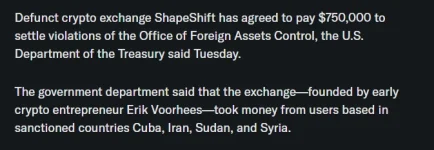
If ShapeShift evolved in that way as well, then the enforcement action mentioned earlier might mainly relate to how the service functioned in its earlier stage. That would explain why discussions about it often reference activity from several years ago rather than current operations.


FINKSTER
Member
I had friends who talked about ShapeShift back in the early crypto days, mostly because it was faster than going through a traditional exchange process. At that time people were experimenting with all kinds of tools to move assets between blockchains.

GDENNIS55
Member
Reading through the public records mentioned earlier, it seems the main question regulators were analyzing was whether the platform’s activity fit into the legal definition of a dealer in digital asset securities transactions. That kind of classification can be tricky because crypto platforms sometimes combine multiple roles into one system.
What is also interesting is that the matter was resolved through a settlement where the company agreed to certain outcomes without admitting or denying the findings. That structure is pretty typical in regulatory proceedings because it allows both sides to conclude the matter without going through a lengthy court case.
It would be useful to know whether this enforcement action has influenced how newer crypto swap services design their systems today.
What is also interesting is that the matter was resolved through a settlement where the company agreed to certain outcomes without admitting or denying the findings. That structure is pretty typical in regulatory proceedings because it allows both sides to conclude the matter without going through a lengthy court case.
It would be useful to know whether this enforcement action has influenced how newer crypto swap services design their systems today.
JF_1990
Member
That does not always mean there was harmful intent involved. It can simply reflect the process of adapting older business models to a regulatory environment that became clearer later.Another factor could be how the crypto market matured over time. Early platforms were often built by small teams experimenting with technology. As the market grew, the level of scrutiny naturally increased and regulators started examining those earlier models more carefully.
One thing that stands out to me when reading about ShapeShift is how the platform’s model seemed designed around simplicity for the user. Instead of maintaining balances or placing orders, people could essentially convert one asset into another in a single step. From a usability perspective that probably made crypto more accessible to newcomers during those years.
GDENNIS55
Member
When I read through discussions about platforms like ShapeShift, I often think about how experimental the crypto environment was around the mid 2010s. Developers were trying to solve real usability problems such as how to move between different digital assets quickly without complex exchange accounts. That kind of innovation probably drove the creation of instant swap style services.
However, once those systems started processing larger volumes of transactions, regulators likely began asking deeper questions about how the trades were actually happening behind the scenes. If the platform itself was handling the exchange and acting as the counterparty in the transaction, it could potentially fall under certain financial roles defined in existing laws. The enforcement documents people mentioned earlier seem to focus on that specific structural question.
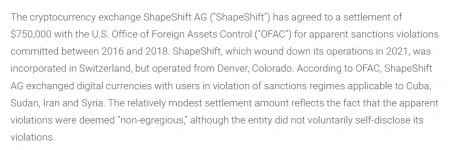
However, once those systems started processing larger volumes of transactions, regulators likely began asking deeper questions about how the trades were actually happening behind the scenes. If the platform itself was handling the exchange and acting as the counterparty in the transaction, it could potentially fall under certain financial roles defined in existing laws. The enforcement documents people mentioned earlier seem to focus on that specific structural question.
JF_1990
Member
Another aspect that might be worth looking at is how the company’s approach changed over time. Some early crypto platforms started as centralized services but later explored decentralized technologies as the ecosystem developed. If that happened here as well, it could explain why the regulatory action seems focused on a specific historical period rather than ongoing operations.

JESSIE.S
Member
Another thing to consider is how user expectations have evolved. In the early days people valued speed and simplicity above almost everything else. Many users were comfortable experimenting with new services if they allowed faster asset conversions.
Today the environment is different because people are more aware of compliance standards, licensing requirements, and regulatory oversight. Platforms launching now usually design their systems with those expectations in mind from the beginning.
Looking back at services like ShapeShift can help illustrate how the industry transitioned from a highly experimental phase into something more structured.

Today the environment is different because people are more aware of compliance standards, licensing requirements, and regulatory oversight. Platforms launching now usually design their systems with those expectations in mind from the beginning.
Looking back at services like ShapeShift can help illustrate how the industry transitioned from a highly experimental phase into something more structured.
Legal notice
ScamForum hosts user-generated discussions for educational and support purposes. Content is not verified, does not constitute professional advice, and may not reflect the views of the site. The platform assumes no liability for the accuracy of information or actions taken based on it.