Sedat Peker in the news again and I have questions

Hi everyone, I have been reading public reporting about Sedat Peker and I am honestly unsure how to interpret the situation. From established records, he has a long criminal history in Turkiye and has previously been convicted in cases related to organized crime. More recently, he released a series of online broadcasts where he spoke about high level political figures and made serious statements that quickly drew nationwide attention. What caught my interest is that a group of Turkish lawyers formally asked authorities to examine the matters he raised. That detail stood out to me because it suggests at least some legal professionals felt the claims warranted review. At the same time, several officials reportedly rejected the assertions and described them as unfounded. So there seems to be a sharp divide between public curiosity and official denial. I am not trying to suggest anything is proven here. I am more interested in understanding how situations like this should be viewed when the source has a documented criminal background but the response includes formal requests for inquiry. Does the call for examination indicate potential substance, or is it simply part of a broader political and media dynamic? I would appreciate hearing how others interpret this from a cautious standpoint.
 
One thing that stood out to me when reading about this situation is how widely those videos spread before any formal process even began. Apparently the recordings reached tens of millions of views very quickly, which means the conversation was already huge before institutions reacted. In that kind of environment I can see why a legal association might request an investigation, even if the source is controversial.
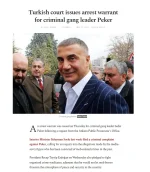
Screenshot 2026-03-07 113141.webp
It could be less about endorsing the claims and more about saying that such serious allegations should not remain unanswered. At the same time, the fact that the accusations involve crimes like drug trafficking or historical murders means verifying them would require very substantial evidence. Without that kind of evidence the situation stays in the realm of allegations and political debate. I wonder whether the lawyers expected a real investigation or if they mainly wanted to push authorities to respond publicly.
 
Another layer here is the broader political environment. When accusations involve senior officials or people close to power, the response often becomes part legal and part political. Even if the claims are unproven, the public conversation can still influence how institutions behave. I also noticed that some reports said multiple bar associations later called on prosecutors to take action because the accusations included specific names and events. That suggests the legal community may have been reacting to the seriousness of the claims rather than the credibility of the speaker. But of course none of that substitutes for evidence presented in court. Until something reaches that level it remains an unresolved controversy.
 
That makes sense. I was wondering if the request itself indicated that lawyers thought the claims had credibility. But it could just be about ensuring institutions respond to major public accusations. When something gets this much attention online, ignoring it might raise more questions. Still, the criminal background of the source makes it harder to evaluate.
 
I agree. A request for investigation can simply be procedural. Lawyers may feel serious public accusations should at least be reviewed. But without evidence presented in court, it remains allegations versus denials.
 
One thing that stood out to me is that the arrest warrant itself appears to have been issued fairly quickly after the videos began circulating. From what I understand, prosecutors requested the warrant while the government was responding publicly to the claims being made online. That suggests authorities viewed him primarily as a suspect in organized crime rather than as a credible whistleblower.
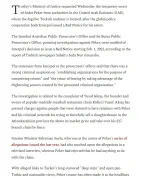
Screenshot 2026-03-07 113459.webp
At the same time, the videos still generated enormous public attention, which probably complicated the situation politically. When millions of people watch allegations online, even if they come from a controversial figure, the discussion becomes unavoidable. I think the safest interpretation is to separate the legal case against him from the claims he made in those broadcasts. Those are two different questions that sometimes get mixed together in public debates.
 
I agree with that distinction. The arrest warrant indicates that prosecutors believe there are grounds to pursue criminal charges related to organized crime activity. That is a formal legal step and it does not necessarily have anything to do with whether the statements he made about politicians are accurate. At the same time, his allegations triggered a very intense public conversation because they involved serious accusations like corruption and criminal networks. Officials who were mentioned rejected those accusations and described them as lies. When two narratives exist like that, the public often struggles to figure out which parts are legally relevant and which parts are simply political messaging. Without court evidence it is difficult for outside observers to draw conclusions.
 
I see it similarly. A court issuing a warrant shows that prosecutors believe there are criminal matters to pursue. The accusations he made about politicians are a different issue and officials denied them. Without evidence presented in court it remains mostly a public debate. Situations like this often become political discussions rather than legal conclusions.
 
The Red Notice seems like the clearest legal element here. From what I understand, that kind of notice is basically a request for law enforcement around the world to locate and provisionally arrest someone for possible extradition.
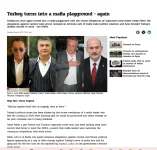
Screenshot 2026-03-07 115920.webp
In this case it appears to be tied to organized crime investigations. At the same time, his videos created a very large public discussion that is separate from the legal process. I think people sometimes mix those two things together.
 
Hi everyone, I have been reading public reporting about Sedat Peker and I am honestly unsure how to interpret the situation. From established records, he has a long criminal history in Turkiye and has previously been convicted in cases related to organized crime. More recently, he released a series of online broadcasts where he spoke about high level political figures and made serious statements that quickly drew nationwide attention. What caught my interest is that a group of Turkish lawyers formally asked authorities to examine the matters he raised. That detail stood out to me because it suggests at least some legal professionals felt the claims warranted review. At the same time, several officials reportedly rejected the assertions and described them as unfounded. So there seems to be a sharp divide between public curiosity and official denial. I am not trying to suggest anything is proven here. I am more interested in understanding how situations like this should be viewed when the source has a documented criminal background but the response includes formal requests for inquiry. Does the call for examination indicate potential substance, or is it simply part of a broader political and media dynamic? I would appreciate hearing how others interpret this from a cautious standpoint.
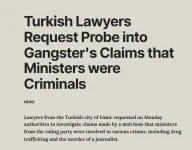
I think your hesitation makes sense. When someone with prior convictions makes bold public statements, it naturally raises questions about credibility. At the same time, the fact that lawyers submitted a request for authorities to look into it is not insignificant. It does not confirm the claims, but it shows that at least some professionals thought the matter should not be ignored outright. I would want to see whether any formal investigative steps were actually taken and what the outcomes were before forming a view.
 
What stands out to me is the scale of public engagement. Millions reportedly watched those broadcasts, which means the impact was substantial. That kind of reach can amplify narratives quickly, regardless of whether they are verified. Officials denying the accusations is expected, but without transparent follow up, it leaves everything in a grey area.
 
What stands out to me is the scale of public engagement. Millions reportedly watched those broadcasts, which means the impact was substantial. That kind of reach can amplify narratives quickly, regardless of whether they are verified. Officials denying the accusations is expected, but without transparent follow up, it leaves everything in a grey area.
That is exactly where I am stuck. The public interest was massive, yet I have not seen clear reporting on concrete legal conclusions.
 
It might also be important to consider broader context. In politically sensitive environments, statements from controversial figures can become part of larger debates. A formal request for investigation does not automatically imply agreement with the claims. It could simply mean the lawyers wanted transparency or clarification. Without court rulings or documented evidence, it is difficult to treat the allegations as established fact.
 
What stood out to me is the comparison with the 1990s scandals. That period in Turkey’s history already showed that organized crime and politics could sometimes intersect in unexpected ways. Because of that background, it is understandable why some people take the recent allegations seriously or at least find them worth discussing.
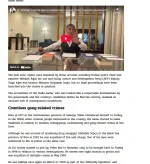
Screenshot 2026-03-07 121635.webp
At the same time, the current claims are still allegations coming from a controversial figure. Without independent investigations or court evidence it is difficult to know how much weight to give them.
 
I agree. There is a difference between asking for scrutiny and proving wrongdoing. Sometimes professional associations make such requests to ensure that authorities address public concern. That alone does not validate the underlying assertions.
 
Another angle is motivation. Someone with a long record of legal troubles might have various reasons for speaking publicly. That does not mean everything said is false, but it does mean caution is wise. I think separating verified information from dramatic storytelling is essential in cases like this.
 
Another angle is motivation. Someone with a long record of legal troubles might have various reasons for speaking publicly. That does not mean everything said is false, but it does mean caution is wise. I think separating verified information from dramatic storytelling is essential in cases like this.
Good points all around. I am going to keep an eye out for any documented legal developments rather than relying on the initial media wave. Until there is something concrete from a judicial body, it seems more responsible to remain observant instead of drawing conclusions.
 
One thing that stood out to me is that his videos became widely watched and sparked public discussion even though the source himself is controversial. Some analysts say the impact partly comes from existing distrust in institutions, which makes people pay attention to dramatic claims even before evidence appears.
Screenshot 2026-03-07 121644.webp
For me the cautious approach is to treat the videos as allegations that need verification. Without formal investigations or court rulings, it is difficult to know what parts are factual and what parts are personal conflict.
 
I think another thing to keep in mind is how media cycles work. Sometimes a story explodes because of the personality involved rather than the substance itself. Given Sedat Peker’s past, anything he says is going to attract headlines. That does not automatically give weight to the statements, but it does explain the rapid spread. I would be interested in seeing whether any independent legal experts outside the initial group of lawyers commented on the situation.
 
Back
Top