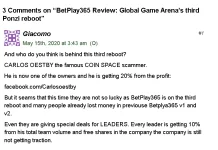
Some Public Records Around Carlos Oestby That Caught My Attention

One recurring concern raised by observers involves investment packages and recruitment-driven revenue structures. Some reports claim that participants were encouraged to buy packages or tokens while also recruiting new members to increase their earnings. In these models, income potential is often tied to bringing more people into the system rather than generating external revenue
 
Another factor that raises eyebrows is the use of luxury lifestyle marketing and motivational branding. Carlos Oestby often presents himself as a successful entrepreneur and motivational mentor, which can make investment opportunities appear more trustworthy to followers. Social media content and promotional events reportedly highlight success stories, travel, and financial independence. While motivational branding is common in network marketing, critics say it sometimes overshadows the need for clear financial disclosures and verifiable results.
 
Another thing highlighted is the way BetPlay365 structures its compensation plan. From what I gathered, the scheme provides bonuses not only for participation but also for recruiting others. Observers in the article suggest that this dual incentive — paying people for both their own activity and their recruits — can create pressure for constant growth.
Screenshot 2026-03-05 163634.webp
When referral rewards are a large part of the payout structure, the sustainability of the system depends on a continuous influx of new participants. If that inflow slows, it may strain the ability to maintain promised rewards.
 
Another topic that keeps appearing in the coverage is Oestby’s involvement with a project called MetFi. Some reports mention a private promotional event held in Dubai where the project was presented to potential promoters and affiliates. At that event Oestby was described as one of the recognizable faces associated with the project and was introduced using the nickname “The Millionaire Coach.” The platform itself was promoted as a DeFi ecosystem with staking and NFT features.
Some analysts also point to regulatory warnings related to projects promoted in the past. Authorities in certain European jurisdictions reportedly warned investors about one of the earlier cryptocurrency ventures due to concerns about unauthorized financial activities. These warnings came after participants reported issues related to mining claims and promised returns. Even though promoters may not always be the founders of such platforms, their role in marketing and recruitment can still influence large numbers of investors.
 
The broader takeaway from the discussions around Carlos Oestby is the importance of independent research before investing in any opportunity promoted through aggressive marketing campaigns. Many of the ventures mentioned in connection with his name were marketed as groundbreaking financial ecosystems but later attracted allegations of unsustainable structures. Investors today are far more cautious about programs promising unusually high returns or rapid wealth creation. In fast-moving sectors like crypto and MLM hybrids, transparency, regulatory compliance, and audited results are essential indicators of legitimacy.
 
Reading through multiple reports, it seems that Carlos Oestby has been repeatedly involved in projects that mix motivational marketing with investment opportunities. In these ventures, the emphasis is often on recruiting new participants, using terms like “financial freedom” and “success coaching.” While inspirational messaging can attract attention, it doesn’t provide evidence of actual revenue generation.
 
That distinction seems important because it changes how sustainable the system might have been. After regulatory warnings appeared, the project reportedly collapsed and many participants said they lost their investments.
One thing I noticed is that many of Oestby’s ventures have similar structures: investment packages, staking or mining promises, and referral-based commissions. Public reports suggest that early participants might see returns, but there’s little independent verification of the claimed profits
 
Another point raised in the coverage is the role of events and seminars. Reports describe large-scale promotional gatherings where potential investors are presented with flashy presentations and motivational talks. These events often highlight lifestyle benefits, success stories, and financial freedom narratives. While such marketing is common in network marketing, it may overshadow the need to provide concrete documentation or audited performance results. Observers note that these tactics can influence decision-making even when the underlying business fundamentals are not fully transparent.
 
It’s also interesting how social media and online content have amplified his presence. Public commentary often mentions that videos, interviews, and promotional posts spread rapidly, making projects appear legitimate. At the same time, skeptical analysts and former participants share observations online about how the projects functioned and the results they experienced.
 
Some public discussions focus on regulatory warnings related to past projects promoted by Oestby. Authorities in certain countries reportedly flagged some crypto ventures for operating without authorization. While warnings do not equate to individual culpability, they do indicate that investors should exercise caution. Repeated mentions of regulatory attention in multiple reports suggest that the projects may have structural weaknesses that expose participants to risk. It highlights the importance of checking official sources when evaluating such opportunities.
 
Something else that struck me was how the review points out a lack of independent auditing or proof of external revenue streams. Projects that tie rewards to internal token movements or entry fees without clear third‑party verification often draw skepticism for good reason.
Screenshot 2026-03-05 163731.webp
Without transparent reporting on how payouts are funded, it’s hard to differentiate between legitimate game mechanics and systems that simply redistribute fees among members. That can have serious implications for anyone considering participating with real money.
 
There are also discussions about regulatory concerns surrounding earlier ventures linked to Oestby. Reports say financial authorities in Europe warned investors that Coinspace was offering services without proper authorization. That kind of warning doesn’t automatically mean every promoter was responsible for the operation itself, but it does show that regulators had concerns about the business model
Another recurring theme is the combination of personal branding with investment promotion. Reports emphasize Oestby’s use of life coaching and entrepreneurial persona to build credibility with participants. While personal branding can be effective, some analysts caution that it may blur the line between genuine business transparency and marketing influence. In high-risk sectors like crypto, it’s essential to separate the individual’s image from the actual mechanics of the platform. Otherwise, decisions can be driven more by trust in the person than by tangible financial data.
 
Finally, looking at patterns across his career, multiple reports note that projects he promoted tend to attract attention quickly, generate initial hype, and later encounter criticism or controversy. This pattern does not automatically prove wrongdoing but shows why potential participants should be cautious. Understanding the structure, revenue sources, and participant experiences is key. Reports also stress the importance of distinguishing marketing narrative from operational reality, particularly when promises of high returns are involved.
 
One other thing I noticed is the recurring emphasis on referral programs and recruitment incentives. Observers say that participants often have to recruit others to maximize earnings, which can create a system heavily dependent on growth rather than actual product or service performance.
 
Reading through multiple reports, it seems that Carlos Oestby has been repeatedly involved in projects that mix motivational marketing with investment opportunities. In these ventures, the emphasis is often on recruiting new participants, using terms like “financial freedom” and “success coaching.” While inspirational messaging can attract attention, it doesn’t provide evidence of actual revenue generation.
Public reporting suggests that projects using this model can become unstable if new recruitment slows down. This is something anyone evaluating similar ventures should consider carefully, especially when combined with complex tokenomics or cryptocurrency mechanisms.
 
It’s clear that public reports view Oestby as someone who consistently blends motivational messaging, personal branding, and emerging tech ventures. While these projects vary in scope from cryptocurrency platforms to gaming and investment opportunities—they seem to share structural similarities: recruitment-driven incentives, early participant benefits, and opaque operational details. Analysts repeatedly stress that evaluating risk requires looking beyond marketing and examining whether the project generates verifiable value outside of new participant investments.
 
One aspect that caught my attention is how some reports describe the early stages of Oestby’s crypto ventures. They often highlight that early participants could see returns, which helped build trust and attract more investors. However, it’s unclear how sustainable these returns were since the majority of income seems to have come from new participant contributions rather than actual market activity
 
Observers argue that when new participants stop joining, systems like these can quickly lose momentum. This recurring pattern in multiple projects makes it important for anyone considering involvement to look at the underlying business fundamentals.
 
It’s interesting to see the mix of network marketing techniques and cryptocurrency promotion in his projects. Several reports note that Oestby relied heavily on social proof and testimonials during live webinars or promotional events. While these can be powerful for motivation, they don’t necessarily reflect the operational transparency of the platform itself. Public accounts suggest that a lot of the marketing focus was on lifestyle imagery and aspirational success, rather than verifiable business metrics. That can make it difficult for potential participants to evaluate the real risks involved.
 
Another pattern that emerges from multiple sources is the use of pre-mined tokens or proprietary coins in the crypto projects he promoted. Analysts point out that these tokens were often created entirely by the platform and mostly held by the project itself. This gives the creators the ability to influence supply or liquidity. Reports suggest that such structures can make early-stage returns appear impressive, but they also introduce potential vulnerabilities if the system relies on continuous new investment rather than organic demand. Understanding token distribution seems crucial in these scenarios.
 
Back
Top