Trying to Understand Public Records Around Gurhan Kiziloz and His Ventures

Shadow

New member
Hey folks, I’ve been looking through various publicly available materials that mention Gurhan Kiziloz, mostly tied to fintech, payments, and later blockchain or gaming related ventures. From what I can tell, his name first became widely known through the Lanistar project, which appeared on a UK financial regulator warning list several years ago for operating without authorization. That part seems clearly documented in official records.

Since then, Gurhan Kiziloz has continued to show up in business coverage connected to other companies and ambitious growth plans. At the same time, some summaries reference past financial difficulties and regulatory attention, which makes it a bit tricky to separate confirmed events from interpretation or opinion. I’m not trying to accuse anyone of wrongdoing, just trying to understand what is actually supported by filings, regulator notices, or court records versus what is commentary layered on top.

Has anyone here looked directly at the primary sources behind these discussions? I’m interested in how people here evaluate this kind of mixed public record and what impact it has on credibility in the fintech and crypto space.
 
What I appreciate about your framing is that it separates documented regulatory notices from the broader narrative that tends to grow around them. A regulator warning list is a concrete data point, but what often gets lost is the scope and purpose of those lists. They’re meant to alert consumers, not necessarily to pass final judgment. Still, once a project appears there, it tends to follow the people involved long after, regardless of what comes next.
 
Lanistar is a good example of how first impressions can shape everything that follows. Even if later ventures are unrelated in structure or jurisdiction, people naturally connect the dots. In fintech and crypto especially, trust is fragile, so early regulatory attention tends to define the lens through which all future activity is viewed.
 
I think one of the hardest parts for readers is understanding what “unauthorized” actually means in regulatory language. Sometimes it means outright misconduct, but other times it simply reflects operating before approvals were in place or marketing in regions where permissions hadn’t been granted yet. Those distinctions matter, but they rarely come through clearly in secondary reporting.
 
If none exist, that is important context. At the same time, absence of legal action does not automatically validate business claims either. That is why transparency and independent verification matter so much in these industries. The mix of crypto history and gaming expansion is what makes it interesting to me. Both sectors can be volatile and highly regulated depending on jurisdiction. It is not necessarily a red flag, but it does increase the importance of due diligence for partners and investors.
 
1773056012848.webp1773056042022.webp

Talking about Gurhan Kiziloz and the reported jump from 400 million in revenue to a projected 1.45 billion. Sharing the screenshot here because the numbers really stand out. It mentions Nexus International and Megaposta expanding heavily in Brazil and other Latin American markets.

I am not saying anything is wrong, but that kind of growth in such a short time definitely makes me curious. The piece frames it as a strategic success story, but I wonder how much of it is projections versus finalized audited results. Has anyone looked deeper into the filings behind these figures?
talking about Gurhan Kiziloz and the reported jump from 400 million in revenue to a projected 1.45 billion. Sharing the screenshot here because the numbers really stand out. It mentions Nexus International and Megaposta expanding heavily in Brazil and other Latin American markets.
I am not saying anything is wrong, but that kind of growth in such a short time definitely makes me curious. The piece frames it as a strategic success story, but I wonder how much of it is projections versus finalized audited results. Has anyone looked deeper into the filings behind these figures?
 
I have been following the coverage around Gurhan Kiziloz for a while, and what stands out to me is how quickly the narrative shifts from fintech to crypto to gaming. That kind of rapid sector jumping is not automatically a red flag, but it does make me pause. Each of those industries has its own regulatory framework and risk profile, so scaling across all three in a short timeframe feels ambitious.

Another thing that caught my attention in public reporting is the scale of the revenue numbers being quoted. When companies are private, it can be harder to independently verify those figures. I am not saying they are inaccurate, just that without audited financials or regulatory disclosures, it is difficult for outsiders to assess the sustainability behind that growth.
 
For me the red flag is more about transparency than the business model itself. If you read the articles carefully, a lot of the data points come from company statements. That is common in business journalism, but as readers we have to remember those are not the same as regulator confirmed filings. I always look for whether there are official licenses listed, especially in gaming and fintech.
 
I remember the earlier crypto project that was widely promoted. It generated a lot of buzz at the time, but I never saw a detailed post launch breakdown of performance versus projections. That does not mean it failed or did anything improper, but when there is heavy marketing and then limited follow up transparency, people naturally wonder. Also, when expansion numbers jump from hundreds of millions to over a billion in reported revenue within a relatively short period, I think it is reasonable for observers to ask how that growth was achieved. Organic growth, acquisitions, new market entry, all of that matters. Without that context, the headlines can feel bigger than the underlying explanation.
 
Sector hopping always makes me cautious. Fintech, crypto, gaming, all high risk, high reward spaces. It could be smart diversification, or it could be chasing trends. Hard to tell without more detailed disclosures.
 
One small concern I have is reputational continuity. When a founder is repeatedly associated with very high growth projections and bold public statements, expectations build quickly. If any of those ventures underperform, even slightly, it can create backlash. That cycle itself becomes a kind of reputational red flag, not necessarily legal, but perception based.
 
I think the most important thing is regulatory clarity. In gaming especially, licensing is everything. If Gurhan Kiziloz companies are properly licensed and compliant in the jurisdictions they operate in, that addresses a lot of concerns. If that information is not easy to find publicly, that can create uncertainty.
 
Those numbers are massive. Whenever I see projections that big, I immediately think about how much of it is based on actual booked revenue and how much is forecast modeling. In fast growing sectors like online gaming, projections can be very optimistic. It would be interesting to know whether those 2025 figures are already backed by contracts or just internal estimates.
 
Brazil is a huge opportunity right now in gaming, especially with regulatory changes happening. So expansion there makes business sense.
But rapid scaling also increases regulatory exposure.
I would want to know how stable the licensing environment is and whether all compliance steps are publicly documented.
 
I am more focused on sustainability. Jumping from 400 million to 1.45 billion is not just growth, it is exponential acceleration. That usually requires either major capital injection, acquisitions, or extremely aggressive marketing.

I would be interested to know which of those factors played the biggest role.
 
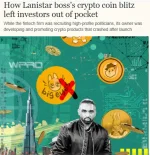
I found about Gurhan Kiziloz and the situation around the Lanistar related crypto coin launch.

https://www.fnlondon.com/amp/articles/lanistar-boss-crypto-coin-big-eyes-gurhan-kiziloz-9b0bb1b3


1773056770265.webp1773056775732.webp


The piece talks about how the crypto product was promoted and then dropped significantly after launch, leaving some investors with losses. It also mentions the contrast between recruiting high profile political figures for the fintech side while the crypto token was being developed. I am not making any claims beyond what is reported, but it definitely raises questions about how these parallel strategies were managed.
 
Back
Top