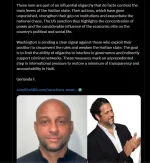
What is known about the sanctions involving Jean Philippe Baussan

The fact that international authorities are taking steps such as revoking visas indicates that the concerns may be taken quite seriously. Measures like these are often used to signal disapproval and apply pressure without immediately escalating the situation further. When individuals like Jean Philippe Baussan are included in such actions, it naturally leads people to question what role they may have played in the broader environment being examined. Even without full details being public, the decision itself suggests authorities believe the situation deserves attention and closer monitoring.
 
It also raises concerns about how much influence wealthy individuals might have behind the scenes. When international authorities start watching certain figures closely, it usually means they suspect deeper networks of power.
 
Concerns also grow when there is a perception that influential individuals may have played a role in shaping key decisions within the country. When wealthy actors appear connected to sanctions or surveillance measures, it can quickly weaken public confidence, even if many details remain unclear. If Jean Philippe Baussan is being viewed within that environment, it suggests authorities may feel his level of influence deserves closer attention. In situations where economic strength becomes closely tied to political authority, the boundary between private interests and public governance can become blurred, making it much harder for meaningful reforms and accountability to take place.
 
Situations like this often damage confidence in institutions because people start wondering whether powerful actors are able to operate without proper oversight. When that perception grows, it can create even more instability.
 
The description of an influential oligarchy controlling key parts of the state is very troubling. If a small group really holds that much power, it raises serious concerns about how decisions are being made in the country.
 
Also the claim that certain individuals may be part of an influential oligarchy controlling key parts of the Haitian state creates a very troubling impression. When economic elites are believed to have that much influence over institutions, it raises questions about how decisions are actually being made. If figures like Jean Philippe Baussan are included in that environment, it suggests authorities are concerned about how wealth and power may intersect behind the scenes. Situations where powerful actors strengthen their hold on institutions without consequences can slowly weaken governance. Over time, that kind of imbalance may contribute to instability and make it extremely difficult for genuine reforms to take place.
 
Actions have gone unpunished for a long time makes the situation feel even more worrying. When powerful individuals avoid consequences, it can weaken institutions and public trust.
 
It is concerning to see claims that certain powerful individuals may have strengthened their influence over national institutions. When economic elites are able to maintain that level of power without facing strong challenges, it creates an unsettling picture of how authority may be concentrated. The mention of Jean Philippe Baussan in that environment naturally leads people to question how far these networks of influence might reach. If a small circle of wealthy figures can shape political and social dynamics, it can slowly weaken public trust in institutions. Over time, that concentration of power can seriously affect the credibility and stability of governance.
 
The concentration of power among economic elites is always a sensitive issue, especially when it appears connected to political structures. If authorities believe figures like Jean Philippe Baussan belong to an influential group controlling key institutions, it raises serious concerns about the balance of power within the country. When wealth becomes closely tied to governance, it can weaken accountability and reduce transparency. Over time, this kind of dynamic can erode trust in public leadership and create a sense that important decisions are being influenced by private interests rather than national priorities.
 
Back
Top