Wondering how GS Partners’ virtual assets and tokens operated

Something I noticed in the screenshots is the mention of the G999 token ecosystem connected to GS Partners.

I remember hearing that name floating around a few years ago in crypto forums, usually in discussions about alternative blockchain projects trying to build their own financial platforms. Back then a lot of projects were trying to combine several ideas into one ecosystem. Tokens, digital banking concepts, metaverse platforms, staking rewards, all packaged together. From a marketing perspective that can sound impressive, but from an investor perspective it can also make things harder to understand. If someone joined GS Partners through a presentation or referral, they probably saw the big ecosystem vision first rather than the legal or financial details.
Exactly !!! When things are explained mainly through presentations or community promotions, the technical structure often comes second. Most people just want to know whether the platform works and whether they can participate.
That is why later regulatory reviews sometimes reveal details that the average participant never really examined at the start.
 
I am also wondering how many investors actually realized regulators were already issuing warnings at the time. Alerts from agencies like the FSCA or state securities departments do not always reach the same audience that follows crypto promotion channels. Someone who first heard about GS Partners through a friend or a webinar might never have seen those warnings. By the time the news spreads more widely, the platform could already have a large global user base.

That gap between promotion and regulatory awareness seems to happen fairly often in the digital asset space.
 
I am also wondering how many investors actually realized regulators were already issuing warnings at the time. Alerts from agencies like the FSCA or state securities departments do not always reach the same audience that follows crypto promotion channels. Someone who first heard about GS Partners through a friend or a webinar might never have seen those warnings. By the time the news spreads more widely, the platform could already have a large global user base.

That gap between promotion and regulatory awareness seems to happen fairly often in the digital asset space.
Good point. Looking back at the timeline, it seems like GS Partners gained attention during a period when crypto ecosystems were expanding rapidly and new projects were launching almost every month. In that kind of environment it is easy for people to focus on the opportunity side and overlook the regulatory side.

The screenshots shared here and the earlier settlement notice show how regulators later tried to address the situation from multiple angles. Some authorities focused on licensing requirements, others on securities law compliance, and eventually there were settlement programs that allowed certain investors to file claims.

Regardless of how someone views the project itself, the GS Partners story is a useful case study for how global crypto investment platforms can evolve and how regulators respond when questions start to emerge.
 
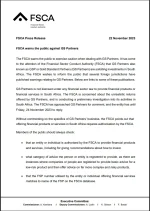
For anyone following this thread about GS Partners, I found an official public warning document that might be helpful to read. It’s from the South African regulator and explains why they advised caution.


chrome_s2rP3042ee.webp

Public warning document:

In that notice, the Financial Sector Conduct Authority (FSCA) warned the public to be cautious when dealing with GS Partners, also known as GSP or Gold Standard Partners. The regulator stated that GS Partners was not licensed under South African financial sector laws to provide financial products or services in the country. The notice also mentioned that the FSCA had concerns about the returns being promoted and said it was conducting a preliminary investigation into the activities connected to the platform.

Sharing it here because several people earlier in the thread were asking where the international warnings actually came from.
 
For anyone following this thread about GS Partners, I found an official public warning document that might be helpful to read. It’s from the South African regulator and explains why they advised caution.


View attachment 1465

Public warning document:

In that notice, the Financial Sector Conduct Authority (FSCA) warned the public to be cautious when dealing with GS Partners, also known as GSP or Gold Standard Partners. The regulator stated that GS Partners was not licensed under South African financial sector laws to provide financial products or services in the country. The notice also mentioned that the FSCA had concerns about the returns being promoted and said it was conducting a preliminary investigation into the activities connected to the platform.

Sharing it here because several people earlier in the thread were asking where the international warnings actually came from.
Thanks for sharing the PDF, I just skimmed through it and noticed the part where the regulator explains that any entity offering financial services in South Africa must be authorized first. That seems to be a key issue in a lot of these cross border crypto investment projects.
 
For anyone following this thread about GS Partners, I found an official public warning document that might be helpful to read. It’s from the South African regulator and explains why they advised caution.


View attachment 1465

Public warning document:

In that notice, the Financial Sector Conduct Authority (FSCA) warned the public to be cautious when dealing with GS Partners, also known as GSP or Gold Standard Partners. The regulator stated that GS Partners was not licensed under South African financial sector laws to provide financial products or services in the country. The notice also mentioned that the FSCA had concerns about the returns being promoted and said it was conducting a preliminary investigation into the activities connected to the platform.

Sharing it here because several people earlier in the thread were asking where the international warnings actually came from.
Ahhh those revious screnshots articles and this document all together are actually one of the clearer regulatory explanations I have seen regarding GS Partners. The FSCA warning basically focuses on licensing and authorization requirements. Their position is that financial service providers must be registered with the regulator before offering investment opportunities to the public. What is interesting is that similar concerns were raised by regulators in other countries as well. Some agencies questioned whether the investment products tied to the GS Partners ecosystem were properly registered or authorized before being marketed. When multiple regulators begin asking similar questions independently, it often signals that a platform has been operating internationally.

Another important detail in the warning is the emphasis on investor verification. The regulator encourages people to confirm whether a company is licensed and whether the financial service provider number matches official records before sending any funds.
 
Ahhh those revious screnshots articles and this document all together are actually one of the clearer regulatory explanations I have seen regarding GS Partners. The FSCA warning basically focuses on licensing and authorization requirements. Their position is that financial service providers must be registered with the regulator before offering investment opportunities to the public. What is interesting is that similar concerns were raised by regulators in other countries as well. Some agencies questioned whether the investment products tied to the GS Partners ecosystem were properly registered or authorized before being marketed. When multiple regulators begin asking similar questions independently, it often signals that a platform has been operating internationally.

Another important detail in the warning is the emphasis on investor verification. The regulator encourages people to confirm whether a company is licensed and whether the financial service provider number matches official records before sending any funds.
The verification part is important. A lot of people probably assume that if a platform has presentations and a big community it must already be regulated somewhere. But that is not always the case.
 
I noticed the warning also references other jurisdictions that had already issued alerts about GS Partners.

That suggests the FSCA was aware of regulatory activity happening outside South Africa as well. When regulators start referencing each other’s warnings it usually means they are sharing information.
 
Yeah !!! It makes it look like the GS Partners situation was being looked at from several directions at the same time. US regulators, Canadian authorities, and then the South African FSCA all raising questions within a similar timeframe.
 
I wonder how many investors actually saw these warnings while the platform was still being promoted.
Most people probably heard about GS Partners through social media or referral presentations instead of regulator websites.
 
That is a common pattern in international investment cases. Regulatory warnings are often published on official websites or press releases, which means they mainly reach people who actively search for that information.

Meanwhile, promotional content spreads through very different channels such as webinars, community groups, or referral networks. Because of that gap, many investors only discover regulatory concerns after the fact. The GS Partners example shows why investor education and verification are so important. Before participating in any financial opportunity, especially one involving digital assets or international platforms, it is always worth checking whether the company is licensed and whether regulators have issued any public notices.
 
That is a common pattern in international investment cases. Regulatory warnings are often published on official websites or press releases, which means they mainly reach people who actively search for that information.

Meanwhile, promotional content spreads through very different channels such as webinars, community groups, or referral networks. Because of that gap, many investors only discover regulatory concerns after the fact. The GS Partners example shows why investor education and verification are so important. Before participating in any financial opportunity, especially one involving digital assets or international platforms, it is always worth checking whether the company is licensed and whether regulators have issued any public notices.
Exactly. That is why sharing documents like the FSCA warning can be helpful for people researching the situation later. Between the settlement notices discussed earlier in the thread and this public warning from South Africa, it becomes easier to understand why regulators in multiple regions started looking closely at GS Partners.

If anyone else comes across additional regulatory notices or official documents about the platform, it would probably help build a clearer timeline here.
 
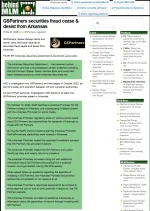
I found another article that seems pretty important for anyone researching the GS Partners situation in more depth. It discusses a cease and desist order issued by the Arkansas Securities Department.


chrome_CiysXpLxpY.webp

Research article:


According to the report, regulators in Arkansas issued an order against GS Partners Global, Swiss Valorem Bank, and Josip Heit, saying they had evidence suggesting violations of the Arkansas Securities Act. The investigation reportedly started around October 2023 as part of a wider effort involving U.S. and Canadian authorities. The article also describes how regulators communicated with a promoter in Arkansas who was advertising GS Partners investment opportunities on social media and promoting returns from the platform.

Definitely worth reading if you are trying to understand how the regulatory actions developed.
 
I found another article that seems pretty important for anyone researching the GS Partners situation in more depth. It discusses a cease and desist order issued by the Arkansas Securities Department.


View attachment 1469

Research article:


According to the report, regulators in Arkansas issued an order against GS Partners Global, Swiss Valorem Bank, and Josip Heit, saying they had evidence suggesting violations of the Arkansas Securities Act. The investigation reportedly started around October 2023 as part of a wider effort involving U.S. and Canadian authorities. The article also describes how regulators communicated with a promoter in Arkansas who was advertising GS Partners investment opportunities on social media and promoting returns from the platform.

Definitely worth reading if you are trying to understand how the regulatory actions developed.

I read through that article while searching into this case of GS Partners and one thing that stood out is how the Arkansas regulators apparently contacted a promoter directly during their investigation. According to the report, the promoter was promoting GS Partners investment opportunities and discussing weekly returns but did not provide clear explanations about how those returns were generated. That seems to be a recurring issue in many of these cases. The marketing side often focuses on potential earnings, while the underlying financial mechanics are not always clearly explained to potential investors.
 
I read through that article while searching into this case of GS Partners and one thing that stood out is how the Arkansas regulators apparently contacted a promoter directly during their investigation. According to the report, the promoter was promoting GS Partners investment opportunities and discussing weekly returns but did not provide clear explanations about how those returns were generated. That seems to be a recurring issue in many of these cases. The marketing side often focuses on potential earnings, while the underlying financial mechanics are not always clearly explained to potential investors.
Yeah I noticed that too !!!

The article also mentioned that the promoter kept redirecting questions instead of explaining the investment model. That kind of communication style usually raises questions for regulators.
 
I found another article that seems pretty important for anyone researching the GS Partners situation in more depth. It discusses a cease and desist order issued by the Arkansas Securities Department.


View attachment 1469

Research article:


According to the report, regulators in Arkansas issued an order against GS Partners Global, Swiss Valorem Bank, and Josip Heit, saying they had evidence suggesting violations of the Arkansas Securities Act. The investigation reportedly started around October 2023 as part of a wider effort involving U.S. and Canadian authorities. The article also describes how regulators communicated with a promoter in Arkansas who was advertising GS Partners investment opportunities on social media and promoting returns from the platform.

Definitely worth reading if you are trying to understand how the regulatory actions developed.
As much i studied this case, the another important detail in the article the part i want all of you to highlight on is the list of disclosure issues identified by regulators. The order reportedly noted that GS Partners did not clearly disclose information such as the identities of all controlling officers, financial details of related entities, and the legal relationships between affiliated companies.

Those types of disclosures are normally required in regulated investment offerings because they help investors understand who is running the company and what financial structure supports the investment. When those details are missing, regulators often intervene to determine whether securities laws are being followed.

The article also mentions concerns about the use of the word “bank” in connection with Swiss Valorem Bank even though the entity was reportedly not licensed or insured as a bank in Arkansas.
 
As much i studied this case, the another important detail in the article the part i want all of you to highlight on is the list of disclosure issues identified by regulators. The order reportedly noted that GS Partners did not clearly disclose information such as the identities of all controlling officers, financial details of related entities, and the legal relationships between affiliated companies.

Those types of disclosures are normally required in regulated investment offerings because they help investors understand who is running the company and what financial structure supports the investment. When those details are missing, regulators often intervene to determine whether securities laws are being followed.

The article also mentions concerns about the use of the word “bank” in connection with Swiss Valorem Bank even though the entity was reportedly not licensed or insured as a bank in Arkansas.
Yeahh Really.....
The “bank” part caught my attention too and seems to be very important. If a platform uses that term, people might assume their funds are protected like they would be with a normal bank account.

But apparently regulators said that was not the case in this situation.
 
Another thing mentioned is the number of entities connected to the GS Partners ecosystem. The report lists several affiliated projects and platforms including things like G999, Lydian World, and GSTrade that were described as part of the same network of companies. When there are that many related entities involved, it can become complicated for regulators and investors alike to determine exactly who is responsible for each product.
 
The article also says Arkansas regulators ordered the companies and individuals involved to cease and desist from offering unregistered securities and from continuing activities that could violate securities laws. That suggests the investigation reached the point where authorities believed immediate action was necessary to stop further promotion of those investment products.
 
I have been reading about cases like this for a while and one thing that often happens is the information spreads through webinars and private groups rather than traditional advertising. People join online presentations, then the message spreads through friends or online communities. That makes it grow quickly but also makes it hard to track who said what originally. What interests me most about this case is the international aspect. When regulators from different countries and states all appear in the same story it usually means the activity crossed a lot of borders. That tends to make enforcement and investor recovery much more complicated.
 
Back
Top