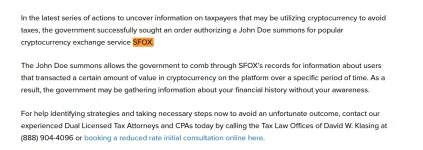
Trying to understand Sfox and how it operates

I’ll be following this thread in case someone with direct industry exposure contributes. Those perspectives can add valuable nuance that public documents alone can’t provide.
Same here. Threads like this tend to attract knowledgeable voices over time, especially when the discussion stays respectful and factual.
 
One thing I keep wondering is how Sfox compares to similar institutional platforms in terms of transparency. Even if it’s not consumer-facing, knowing how it handles reporting and compliance could give a clearer picture. Public records hint at stability, but not much else.
 
One thing I keep wondering is how Sfox compares to similar institutional platforms in terms of transparency. Even if it’s not consumer-facing, knowing how it handles reporting and compliance could give a clearer picture. Public records hint at stability, but not much else.
That’s a good point. Comparing firms can highlight patterns or red flags. From what I’ve seen, many institutional crypto firms operate quietly. Sfox doesn’t seem unusual in that sense, but it also doesn’t make it fully understandable to outsiders.
 
I like how this discussion is keeping curiosity front and center. It’s a good reminder that absence of detailed info doesn’t equal a problem, just an unknown. I think threads like this help people separate what is known from what is assumed.
 
I think what you are seeing is part of a bigger regulatory push rather than something tied to one company. Crypto has been under increasing scrutiny for a while now, especially when it comes to tax reporting.
 
I actually remember reading about these kinds of summons in connection with a few larger exchanges in the past. From what I understand, it is not necessarily about accusing the platform of doing anything wrong, but more about identifying users who may not have reported gains properly. That part sometimes gets lost when people first see the headlines.

With Sfox, it feels like it might just be one of the platforms that has enough transaction volume to attract attention. Regulators probably go after entities that can give them broader datasets rather than chasing individuals one by one. I would be curious to know whether Sfox complied fully or challenged anything in court, since that sometimes changes how these situations play out.
 
I used Sfox briefly a couple of years ago, and nothing about the platform itself felt suspicious to me. It seemed more like a brokerage style service connecting to multiple liquidity providers.
 
I used Sfox briefly a couple of years ago, and nothing about the platform itself felt suspicious to me. It seemed more like a brokerage style service connecting to multiple liquidity providers.
Seeing it mentioned in tax related documents does not surprise me though given how things have been evolving.
 
What stands out to me is how often crypto platforms end up in these kinds of legal processes even when they are not the main focus. The authorities seem to use them as a gateway to user data rather than treating them as the subject of the investigation. That distinction is pretty important but easy to miss if you are just skimming headlines.

In the case of Sfox, the wording in public records seems to lean toward that pattern. It looks more like a data request tied to tax enforcement than anything alleging misconduct by the company itself. That said, I do think it raises questions about privacy and how much user information can be requested in bulk.

I also wonder how users are notified in these situations, if at all. If someone had activity on the platform years ago, they might not even realize their data could be part of a review. That uncertainty is probably what makes people uneasy when they see these reports.

 
From what I have followed, these actions have been happening in waves. First it was some of the biggest exchanges, then gradually other platforms started appearing in similar contexts. It does not always mean there is anything unique about the platform itself.
 
I think another angle worth considering is timing. A lot of these legal actions seem to happen after periods of high crypto activity when gains were more likely. That might explain why certain platforms get mentioned depending on when users were most active.
 
This is why I always tell people to assume that anything tied to financial transactions can eventually be reviewed if needed. Crypto used to feel more separate, but that gap seems to be closing.
 
I do not see anything here that clearly points to an issue with Sfox itself, but it is definitely a reminder of how the ecosystem is changing.
 
I think part of the confusion comes from how these legal processes are written up in public articles. They often mention a company name prominently, even if the company is just being asked to provide information rather than being accused of anything. That can make it seem more serious than it actually is at first glance.
 
I have been following crypto regulation for a while, and honestly this fits a pattern that has been building over the years. Governments are trying to close the gap between traditional financial systems and digital assets, especially when it comes to reporting obligations. Platforms like Sfox end up being part of that bridge whether they want to or not.

What I find interesting is how little clarity there is for everyday users. Someone might have used Sfox casually for trades without realizing that their activity could later be reviewed in a broader tax compliance effort. That does not mean anything is wrong, but it does highlight how expectations around privacy in crypto have shifted.
 
I looked into similar cases before, and usually the focus is on unidentified users rather than the company itself.
With Sfox, I would probably treat it as informational rather than alarming. It is something to be aware of, especially if someone has used crypto platforms in the past, but not necessarily something that signals a direct issue with the service.
 
One thing I keep thinking about is how this might affect trust in platforms over time. Even if the company is just responding to a legal request, users might still feel uneasy knowing their data could be shared under certain conditions.
 
I wonder if anyone here has actually received any kind of notification related to this. Not specifically about Sfox, but in general when these kinds of data requests happen.

It would be interesting to hear real experiences instead of just reading summaries of public records.


chrome_vWUhSgGwDy.webp
 
Back
Top